

How To Introduce The Setting In A Story
"When you go out a beautiful identify, yous carry information technology with you wherever you lot become," lifestyle author Alexandra Stoddard once wrote. She was referring to existent-life places, but the same is truthful of fictional ones — the setting of a story tin be only as affecting and memorable as a place you've actually visited.
But how practice authors choose the right settings for their stories, and what tactics do they apply to bring them to life? Find out in this comprehensive guide to story setting, complete with definition, examples, and tips for writing a setting that readers will remember forever!
What is the setting of a story?
The setting of a story is where and when it takes place. In other words, story setting involves both time period and geographic region, also equally individual locations within that region (such as a character's firm, workplace, or favorite coffee store).
Setting serves as the backdrop to everything that happens in a story, and often contributes significantly to its atmosphere. This is why romance novels are typically set in small, cozy towns and horror stories in isolated, unnerving places (a Transylvanian castle, a motel in the woods). Indeed, setting tin exist so powerful, information technology may even feel similar a character itself!
What are the three types of setting?
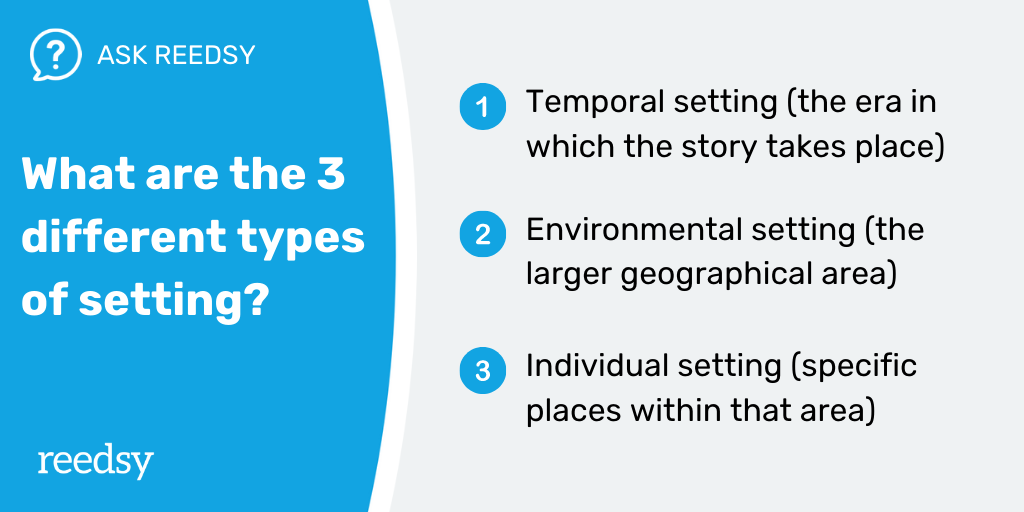
You might think of setting in terms of 3 "types": temporal, environmental, and individual. To demonstrate these concretely, permit's look at the various settings of The Great Gatsby (insert concrete jungle joke here 🏙️).
- Temporal setting: the American 1920s, right in the heart of the Jazz Age.
- Environmental setting: southeastern New York — New York Urban center and Long Island.
- Individual settings: Gatsby'south mansion, Tom and Daisy's mansion, Myrtle's apartment, the Plaza Hotel, and more.
Note that just as characters tin can be entire products of an author's imagination, so often are these individual settings! (The Manhattan Plaza Hotel obviously exists in existent life, simply the characters' residences in The Not bad Gatsby do not.) Authors frequently combine real time, existent place, and invented — or at to the lowest degree embellished — individual settings, to ground the story in authenticity while maintaining flexibility on the details.
🎵
Tell united states about your volume, and we'll give you a writing playlist
It'll only take a infinitesimal!
Story setting examples
You can probably think of a dozen more setting examples. Merely merely to solidify the notion, here are 3 particularly potent ones, along with passages to bear witness how each author paints the setting of their story.
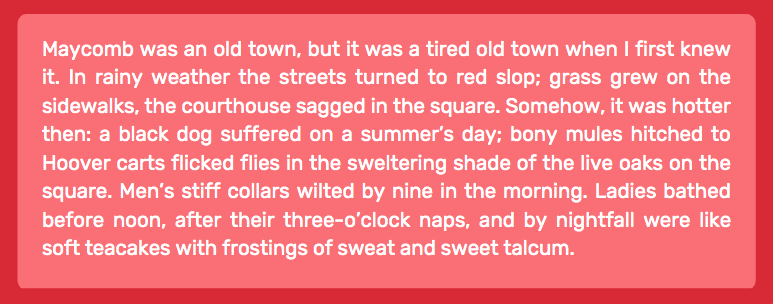
Maycomb, Alabama in To Impale a Mockingbird
Harper Lee'due south unparalleled classic near American race relations in the 1930s takes place in the small boondocks of Maycomb, Alabama. Notice how the narrator, Lookout man, describes Maycomb every bit stiflingly humid and one-time-fashioned, establishing the era's status quo of oppression and suffering:
Narnia in The Lion, The Witch and the Wardrobe
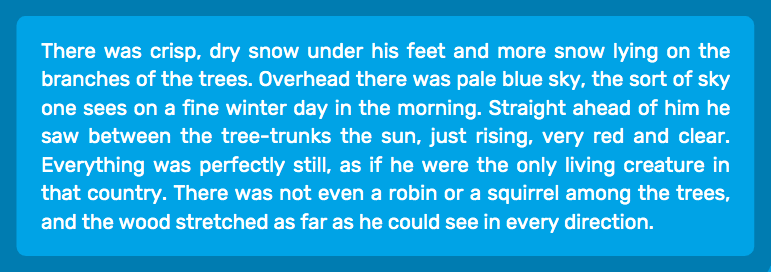
Meanwhile in The Panthera leo, The Witch and the Wardrobe, C.S. Lewis introduces Narnia equally a wintertime wonderland full of possibilities — though it'due south somewhat deceiving in that the White Witch has cursed the land to eternal common cold. But information technology's crucial to the narrative that Narnia appears every bit a withal, snowy place that lulls Edmund into a false sense of security simply before he meets the Witch:
North West London in NW
For a more than gimmicky example, let'southward look at a description of N Due west London in Zadie Smith's novel NW. As part of the novel'southward vision of London equally a polyphonic city "containing multitudes," Smith describes the expanse in terms of both former inhabitants and present-day scenery. To arrive at the complex present, she must outset acknowledge the past:
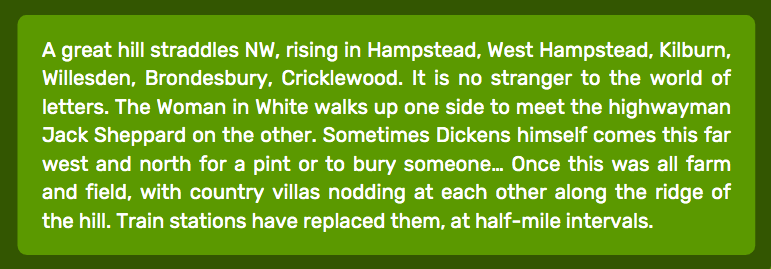
Of form, each of these passages provides but a glimpse of the rest of the volume. As an author, don't just drop a paragraph of scenery description at the beginning and never mention setting once again!
For setting to be constructive, it needs to filter through the unabridged story — fortunately, this adjacent section on how to write setting volition show you how to do but that.
How to write setting in a story
1. Choose your setting wisely
Permit'southward talk about setting suitability: as the examples above conspicuously demonstrate, every peachy story hinges on setting. The Peachy Gatsby would non piece of work if it were set during the Great Low, and it'south about incommunicable to imagine about of Zadie Smith's books taking place anywhere other than London.
So earlier you first writing your story, make sure the setting fits similar a glove. For some authors, this volition be easy! But for others — especially those who are doing a flake of worldbuilding for a sci-fi or fantasy novel — choosing your setting may be a bit trickier.
To set you (no pun intended) on the right path, here are a few important questions to consider:
- Exactly where and when volition your story take place? Take this time to nail down the details. If it's "contemporary," does that hateful present day or ten years ago? If it'south in a sure country, what urban center or town? And if you have multiple settings, how long volition the characters spend in each ane?
- Is this setting a existent place, and if so, how much research will it require to convey in good faith? If information technology's just based on a real place, how much overlap will there exist?
- How will the setting of the story factor into the characters' lives? Will it help them or forbid them from achieving their goals? If neither, why choose this setting at all?
In one case you've answered these to your satisfaction, you tin settle on your setting (every bit it were) and begin constructing it in more detail.
two. Focus on what's unique
Not every element of your setting will exist worth noting, so focus on what's unique. Every city has buildings and sidewalks, but how are they different from every other urban center's? If someone leans their head out the window, what exercise they hear also traffic or birds? Does the town square smell like staff of life from the local bakery, or like pollution from a nearby factory?
Become the details direct
Again, think of your story setting most equally some other grapheme. But as you might make full out a grapheme contour to flesh out their quirks, you can profile your setting likewise! Here are some "setting contour" questions to get you lot started:
📜 What's the history of this area?
🌦 What is the weather like each flavor?
🌇 What are the biggest landmarks of this setting?
🏡 In what sorts of residences practice well-nigh people live?
🚙 How do people tend to go around (walking, driving, etc.)?
👍 Why do people like (or dislike) living (or visiting) here?
The natural addition to each of these questions is: and how does this bear upon my characters? This is where y'all'll tap into the most interesting features of your setting — by considering how your characters will perceive and react to what's around them. To quote Carmen Maria Machado: "Setting is not inert. It is activated by point of view."
Now, with a articulate sense of what y'all want to highlight in your environmental setting, you can move on to incorporating these features into your story.
Pro tip: When writing most places you've never been or have only seen as a tourist, over-emphasizing famous landmarks like Big Ben, the Eiffel Belfry, and the Empire State Building will make your work read like that of an amateur. To avoid this, play around on Google Street View and detect some more than quotidian hangouts for your characters!
3. Use all five senses in descriptions

As you describe each setting of your story, make certain yous don't merely talk about how it looks. Instead, utilise all 5 senses: sight, audio, smell, affect, and even sense of taste.
You shouldn't use all of these in every clarification, nor should you continuously rehash settings you've already described. Simply as a rule of pollex, each fourth dimension your characters visit a new location — or experience that location in a new context (e.chiliad. at night rather than in the daytime) — yous should devote a paragraph to setting the scene.
Hither'south a great example of concise and multi-sensory setting description from Leigh Bardugo'south 9th Business firm:
Inside, the music thumped and wailed, the heat of bodies washing over them in a gust of perfume and moist air. The large foursquare room was dimly lit, packed with people circling skull-shaped vats of punch, the dorsum garden strewn with strings of twinkling lights beyond. Darlington was already starting to sweat.
In just three sentences, nosotros get four out of 5 senses:
- Sight ("dimly lit, packed with people");
- Audio ("the music thumped and wailed");
- Olfactory property ("a gust of perfume and moist air");
- Bear upon/concrete sensation ("already starting to sweat").
The rest of this political party scene consists of mostly dialogue and action, but Bardugo is conscientious to depict each new room the characters enter, so the reader ever has a articulate picture of what's happening. Indeed, the more you prove rather than tell with sense-based setting descriptions, the more you'll immerse readers in your story. Just don't go overboard with pages and pages of detail — zero in on what'southward virtually interesting and unique.
🖊️
Which famous author exercise you write like?
Find out which literary luminary is your stylistic soulmate. Takes one infinitesimal!
4. Develop your characters' relationships to the setting
Once you've established the characters in your story, y'all can dig into their relationships with the setting.
These relationships can take many forms. Say your main graphic symbol has lived in the same town their entire life; they might take a longtime fondness for information technology, or they could resent and feel trapped by the setting. Whatever you decide, make sure this nuance comes through in your narration!
What you don't want is a character and then discrete from their surroundings that their story could accept place anywhere. At blank minimum, you need them to interact with the setting in specific, realistic means. For greater affect, apply setting to challenge them, assist them, or both.
💪 Setting as a challenge vs. setting as an nugget
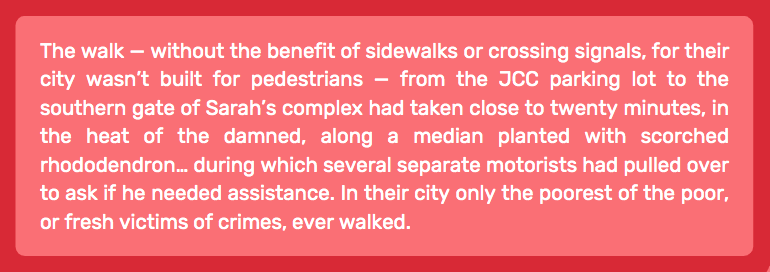
Susan Choi does an amazing chore of positioning setting equally a challenge in Trust Exercise, which begins with two young characters trying to walk to each other in a vast, highway-dense urban center:
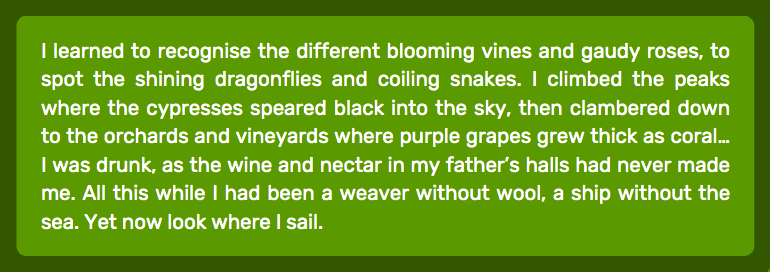
But setting doesn't need to oppose your characters in order to feel relevant and meaningful. Hither's an example of setting every bit an asset, from Madeline Miller's Circe, describing Circe exploring her new island:
And call up, you lot're non limited to 1 or the other! Over the class of a story, a setting may play varying roles in a character's life, both positive and negative. Simply brand sure it doesn't sit down at that place every bit an idle properties.
5. Keep your readers oriented
The final key dominion of story setting is: keep your readers oriented. You don't want people to get distracted from your plot considering they're too decorated trying to untangle where the action is happening!
Ironically, one of the quickest ways to misfile readers is to give them likewise much setting detail. So when introducing a setting, keep the clarification concise, equally in the Ninth House example — a few evocative sentences will do. If you lot have more to say near the setting, you lot tin can incorporate it later.
In terms of specific directions, again, less is more than. "He walked out of his flat building, turned left onto the road, then right onto the sidewalk, then some other left onto another sidewalk" hardly makes for riveting storytelling. If yous must apply directions, at least ensure they're consistent! Don't say the police station is on the east side of town, only to describe the sun setting (a famously western miracle) backside it in the next scene.
These are the kinds of bug that can really throw readers off, even subconsciously — so brand certain yous get them directly. If y'all're particularly worried well-nigh setting inconsistencies, you tin can always rent a copy editor to rummage through your work.

An editor volition ensure your setting is spotless ✨
The all-time copy editors are hither on Reedsy. Sign upwards to meet them today.
Acquire how Reedsy tin can help you craft a beautiful volume.
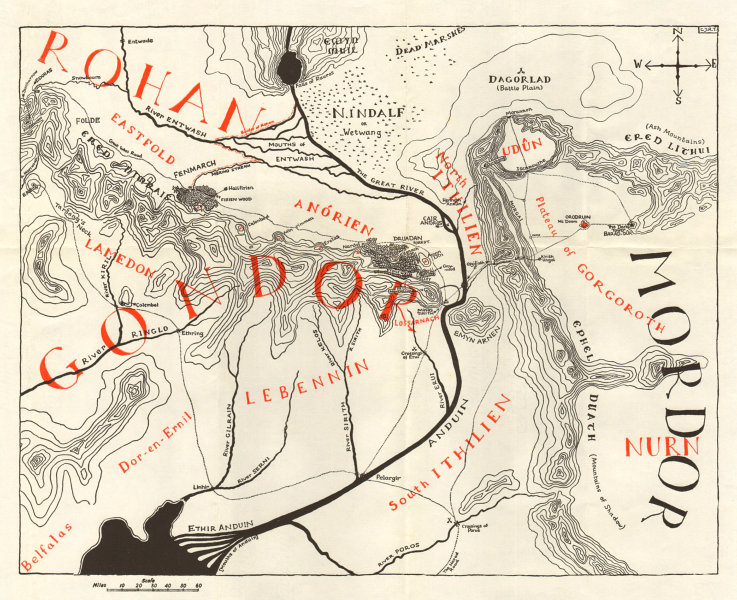
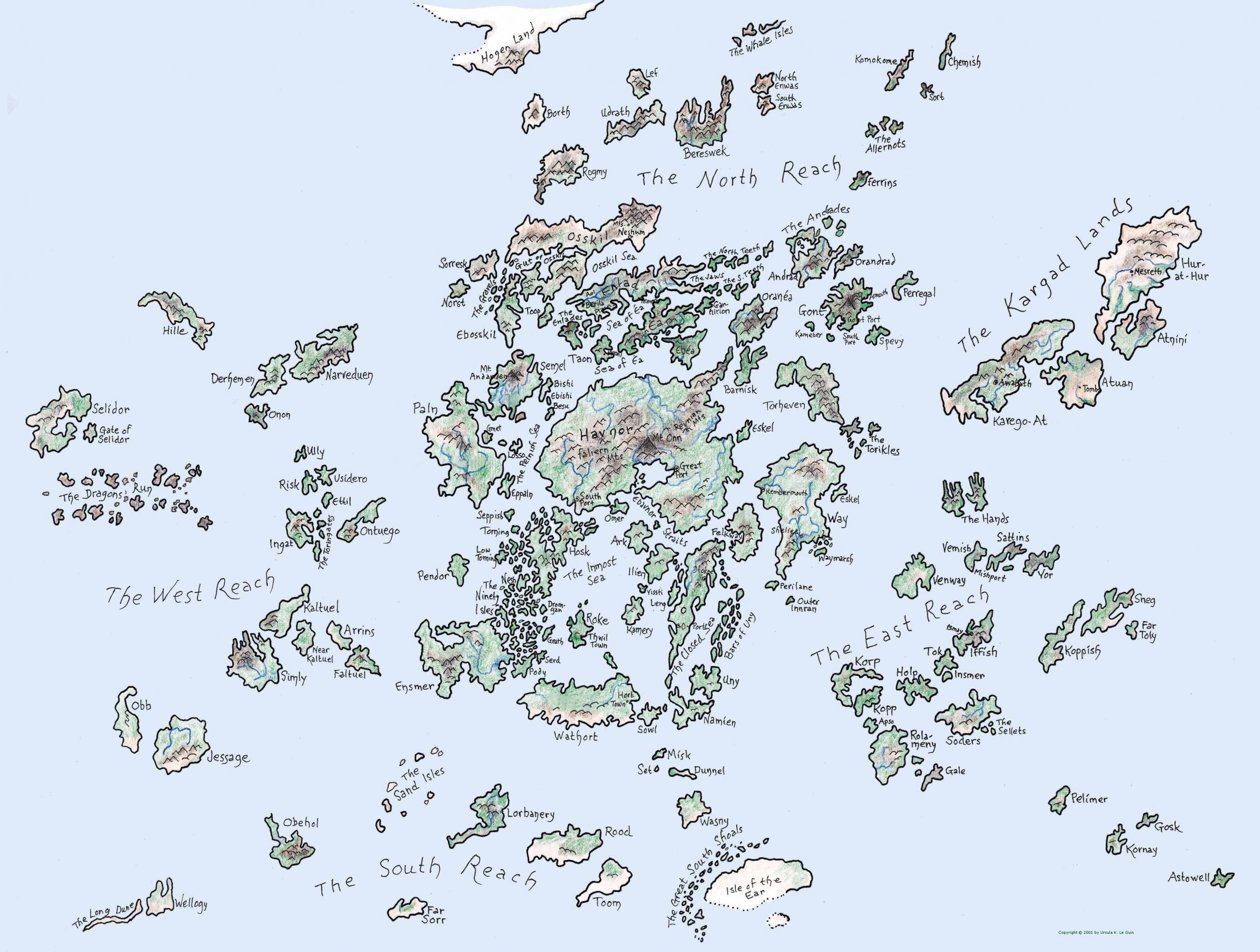
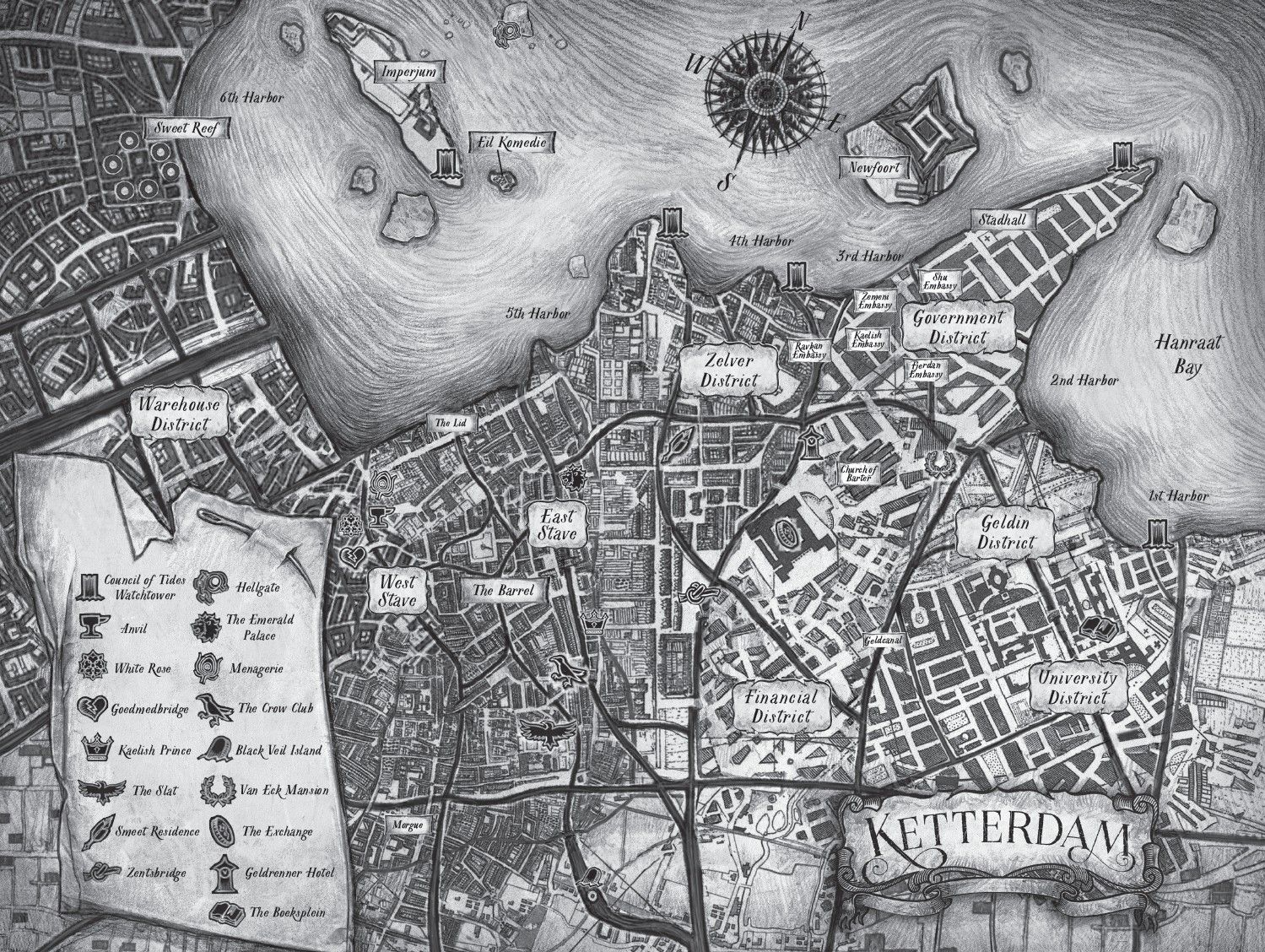
🗺️ Consider cartoon a map
Whether yous're building an elaborate world from scratch or merely desire to be as authentic as possible when representing a real identify, a map of your setting could help (y'all might even committee an illustrator to draw one for you lot). This will give you a more than physical sense of your setting while you're writing, equally well as streamline the reader'southward experience down the line.
Hither are some of our favorite fictional maps, for reference:
And there you have it — everything you demand to know about writing the setting of a story! With a solid sense of time and place and compelling, graphic symbol-based descriptions, y'all'll be well on your way to conjuring a setting, like Narnia or Jazz-Age NYC, that readers won't forget. It's an essential step to becoming a meliorate writer.

How To Introduce The Setting In A Story,
Source: https://blog.reedsy.com/setting-of-a-story/
Posted by: brownthorm1936.blogspot.com
0 Response to "How To Introduce The Setting In A Story"
Post a Comment